Theologians / Anselm

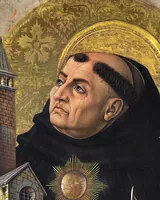
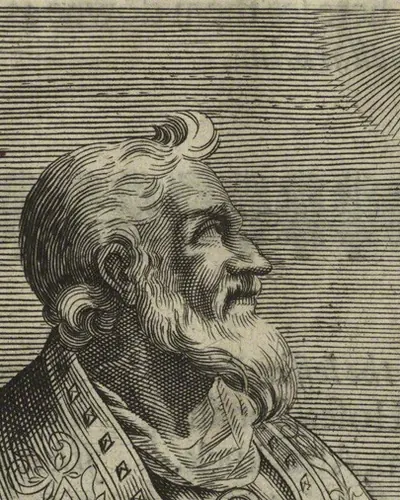
Portrait of Anselm of Canterbury
Portrait: George Glover (17th-century engraving) · Public domain · Wikimedia Commons. Cropped and resized by Credo.

Catholic · Medieval

Anselm of Canterbury

1033 – 1109

Faith seeking understanding

Benedictine abbot of Bec and Archbishop of Canterbury, Anselm is called the father of scholasticism. He formulated the ontological argument for God's existence and, in Why God Became Man, the satisfaction account of the atonement.

How close are you? All theologians

Where Anselm stands

God & Revelation

  • Can human reason reach God, or only God's self-revelation?Natural theology 75%
  • Is God beyond change and suffering, or moved by the world?Classical theism 100%
  • Does Scripture stand alone, or within the Church's Tradition?Scripture & Tradition 80%

Grace & Salvation

  • Does salvation rest finally on God's choice or on a free human response?Sovereign election 65%
  • Will all be saved in the end, or only some?Particularism 80%
  • Is salvation chiefly a verdict or a transformation?Forensic justification 60%

Church & World

  • Do sacraments convey what they signify, or commemorate it?Sacramental realism 85%
  • Is authority in the Church handed down or held in common?Hierarchical 85%
  • Should the Church stand apart from society or work to transform it?Distinct community 60%

Method & Spirit

  • Is theology a rigorous science or a contemplative ascent?Systematic reason 90%
  • Read the Bible first as history, or first as the Church's book?Theological & canonical 80%
  • Does doctrine develop and revise, or guard a fixed deposit?Fixed tradition 80%

Why these placements

Ontological argument (Proslogion) as rational reflection within faith; classical perfect-being theology; satisfaction theory of the atonement; disciplined dialectical method.

Key works

  • Monologion
  • Proslogion
  • Why God Became Man (Cur Deus Homo)

Sources

Read more about Anselm

11 verified links: reference articles, Anselm's own writings where a free text exists, and peer-reviewed scholarship (open access first). Links open in a new tab.

Kindred spirits

Furthest apart

How close are you?