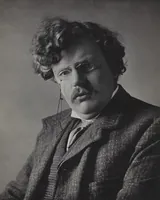
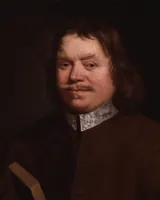
Portrait: John S. Murray · Public domain · Wikimedia Commons. Cropped and resized by Credo.
Anglican · 20th century
C. S. Lewis
1898 – 1963
Mere Christianity and myth become fact
An Oxford and Cambridge scholar of medieval literature and a former atheist, Lewis became the twentieth century's best-known lay defender of Christianity. Mere Christianity begins from the moral law; The Great Divorce imagines hell as a door locked from the inside; and Narnia retells the gospel as story.
Can human reason reach God, or only God's self-revelation?Natural theology 90%
Natural theologyRevelation alone
Is God beyond change and suffering, or moved by the world?Classical theism 80%
Classical theismRelational God
Does Scripture stand alone, or within the Church's Tradition?Prima Scriptura
Scripture aloneScripture & Tradition
Grace & Salvation
Does salvation rest finally on God's choice or on a free human response?Synergy 80%
Sovereign electionSynergy
Will all be saved in the end, or only some?Wider hope
Universal hopeParticularism
Is salvation chiefly a verdict or a transformation?Transformation & theosis 80%
Forensic justificationTransformation & theosis
Church & World
Do sacraments convey what they signify, or commemorate it?Sacramental realism 70%
Sacramental realismMemorial & symbol
Is authority in the Church handed down or held in common?Hierarchical 65%
HierarchicalCongregational
Should the Church stand apart from society or work to transform it?Critical engagement
Distinct communityTransforming society
Method & Spirit
Is theology a rigorous science or a contemplative ascent?Systematic reason 65%
Systematic reasonMystical & apophatic
Read the Bible first as history, or first as the Church's book?Theological & canonical 65%
Historical-criticalTheological & canonical
Does doctrine develop and revise, or guard a fixed deposit?Fixed tradition 80%
Development & revisionFixed tradition
Why these placements
Mere Christianity (moral argument; 'little Christs'); The Problem of Pain and The Great Divorce (freedom and hell); 'Myth Became Fact'; Anglican sacramental practice; 'On the Reading of Old Books' (suspicion of novelty).
C. S. Lewis's own writings, listed under key works
Read more about C. S. Lewis
10 verified links: reference articles, C. S. Lewis's own writings where a free text exists, and peer-reviewed scholarship (open access first). Links open in a new tab.


 God & Revelation
 Grace & Salvation
 Church & World
 Method & Spirit