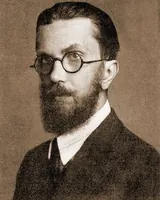
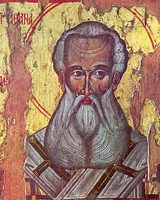
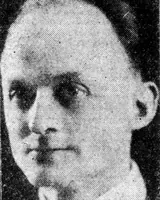
Portrait: Unknown author · Copyrighted free use · Wikimedia Commons. Cropped and resized by Credo.
Early Church · Patristic
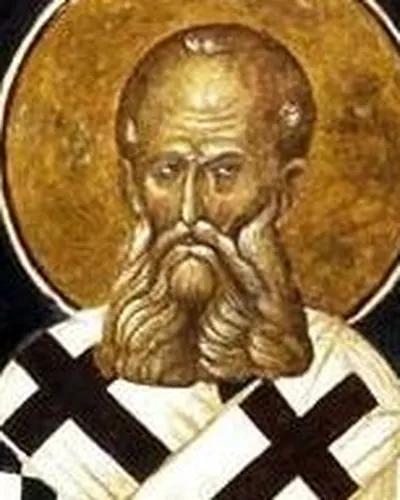
Gregory of Nazianzus
c. 329 – 390
What is not assumed is not healed
A reluctant bishop and gifted orator, Gregory preached five Theological Orations in Constantinople that became classic statements of the Trinity. Against those who said Christ lacked a human mind, he argued that whatever the Word did not take on could not be saved. The Eastern churches call him simply ‘the Theologian’.
Can human reason reach God, or only God's self-revelation?Faith seeking understanding
Natural theologyRevelation alone
Is God beyond change and suffering, or moved by the world?Classical theism 95%
Classical theismRelational God
Does Scripture stand alone, or within the Church's Tradition?Scripture & Tradition 80%
Scripture aloneScripture & Tradition
Grace & Salvation
Does salvation rest finally on God's choice or on a free human response?Synergy 75%
Sovereign electionSynergy
Will all be saved in the end, or only some?Particularism 60%
Universal hopeParticularism
Is salvation chiefly a verdict or a transformation?Transformation & theosis 95%
Forensic justificationTransformation & theosis
Church & World
Do sacraments convey what they signify, or commemorate it?Sacramental realism 85%
Sacramental realismMemorial & symbol
Is authority in the Church handed down or held in common?Hierarchical 80%
HierarchicalCongregational
Should the Church stand apart from society or work to transform it?Distinct community 60%
Distinct communityTransforming society
Method & Spirit
Is theology a rigorous science or a contemplative ascent?Mystical & apophatic 75%
Systematic reasonMystical & apophatic
Read the Bible first as history, or first as the Church's book?Theological & canonical 85%
Historical-criticalTheological & canonical
Does doctrine develop and revise, or guard a fixed deposit?Fixed tradition 90%
Development & revisionFixed tradition
Why these placements
Theological Orations 27–31 (God beyond comprehension yet Trinity confessed precisely: classical theism, apophatic tone); Letter 101 ‘what is not assumed is not healed’ (salvation as healing and deification); defence of Nicene faith.
Gregory Nazianzen's own writings, listed under key works
Read more about Gregory Nazianzen
9 verified links: reference articles, Gregory Nazianzen's own writings where a free text exists, and peer-reviewed scholarship (open access first). Links open in a new tab.

 God & Revelation
 Grace & Salvation
 Church & World
 Method & Spirit