84%

Closest match

H. Richard Niebuhr

1894 – 1962 · Reformed (Evangelical and Reformed)

Where you meet

  • Memorial & symbol
  • Development & revision
  • Sovereign election

Your result · 20th century

Result for Shanon

Sovereign election

God chooses and effectively draws those who are saved.

Bring a friend

Your theology, branch by branch

YouH. R. Niebuhr, your closest match

God & Revelation

Faith seeking understanding · Unchanging yet responsive · Scripture & Tradition

  • Can human reason reach God, or only God's self-revelation?Faith seeking understanding
  • Is God beyond change and suffering, or moved by the world?Unchanging yet responsive
  • Does Scripture stand alone, or within the Church's Tradition?Scripture & Tradition 69%

Grace & Salvation

Sovereign election · Union with Christ

  • Does salvation rest finally on God's choice or on a free human response?Sovereign election 73%
  • Will all be saved in the end, or only some?Particularism 63%
  • Is salvation chiefly a verdict or a transformation?Union with Christ

Church & World

Conciliar · Distinct community

  • Do sacraments convey what they signify, or commemorate it?Memorial & symbol 64%
  • Is authority in the Church handed down or held in common?Conciliar
  • Should the Church stand apart from society or work to transform it?Distinct community 68%

Method & Spirit

Prayerful reason · Critical realism · Development & revision

  • Is theology a rigorous science or a contemplative ascent?Prayerful reason
  • Read the Bible first as history, or first as the Church's book?Critical realism
  • Does doctrine develop and revise, or guard a fixed deposit?Development & revision 68%

Your profile in depth

Moderate · 12 of 12 axes answered

Your leanings are real but gentle: on many questions you see the force of both sides. Matches for profiles like this are closer together, so your near neighbours matter as much as your top match.

No single conviction stands out; your firmest answers are still within reach of the middle.

Your closest match is H. Richard Niebuhr (84%), from the Reformed family and the 20th century era. Your top ten span 5 tradition families and 5 eras, so your views cut across the usual denominational lines.

Still open: “Can human reason reach God, or only God's self-revelation?”, “Is God beyond change and suffering, or moved by the world?”, “Is salvation chiefly a verdict or a transformation?” and 3 more.

Branch by branchWhat your leanings mean, question by question

God & RevelationYour most open branch

  • Can human reason reach God, or only God's self-revelation? Middle

    You keep reason and revelation in conversation, with faith looking for understanding rather than replacing it.

  • Is God beyond change and suffering, or moved by the world? Middle

    You hold God's constancy and God's responsiveness together without letting either swallow the other.

  • Does Scripture stand alone, or within the Church's Tradition? Leaning

    On balance, you read Scripture inside the Church's living Tradition and teaching office, as things that belong together.

On these three questions alone, your closest match is Julian of Norwich.

Grace & SalvationYour most settled branch

  • Does salvation rest finally on God's choice or on a free human response? Leaning

    On balance, you rest salvation finally on God's choosing and drawing rather than on the human decision.

  • Will all be saved in the end, or only some? Leaning

    On balance, you hold that salvation comes through faith in Christ and that some may finally refuse it.

  • Is salvation chiefly a verdict or a transformation? Middle

    You place verdict and transformation together inside the larger picture of union with Christ.

On these three questions alone, your closest match is Jan Hus.

Church & World

  • Do sacraments convey what they signify, or commemorate it? Leaning

    On balance, you treat baptism and the Lord's Supper as signs of remembrance and of faith already present.

  • Is authority in the Church handed down or held in common? Middle

    You favour shared, conciliar authority, with councils, synods or elders deciding together.

  • Should the Church stand apart from society or work to transform it? Leaning

    On balance, you see the Church's first calling as being a faithful, distinct community, wary of power.

On these three questions alone, your closest match is J. Gresham Machen.

Method & Spirit

  • Is theology a rigorous science or a contemplative ascent? Middle

    You want argument and prayer to keep each other honest.

  • Read the Bible first as history, or first as the Church's book? Middle

    You want history and theology at the same table when you read Scripture.

  • Does doctrine develop and revise, or guard a fixed deposit? Leaning

    On balance, you expect doctrine to grow and to be rethought in every age.

On these three questions alone, your closest match is Gustavo Gutiérrez.

Convictions and open questions0 firm · 6 open

Strongest convictions

None of your answers reach the firm end of an axis (60% of the way or more). Your profile is built from leanings.

Open or undecided

  • Can human reason reach God, or only God's self-revelation?in the middle (faith seeking understanding)
  • Is God beyond change and suffering, or moved by the world?in the middle (unchanging yet responsive)
  • Is salvation chiefly a verdict or a transformation?in the middle (union with Christ)
  • Is authority in the Church handed down or held in common?in the middle (conciliar)
  • Is theology a rigorous science or a contemplative ascent?in the middle (prayerful reason)
  • Read the Bible first as history, or first as the Church's book?in the middle (critical realism)
Unusual combinations3 found
  • Distinct community with development & revision

    Only 2 of the 178 theologians in Credo combine these two, among them John Scotus Eriugena, Meister Eckhart.

    A distinct, counter-cultural church combined with openness to doctrinal change: apart from the world, yet not fixed in its forms.

  • Sovereign election with distinct community

    Only 3 of the 178 theologians in Credo combine these two, among them Blaise Pascal, John Bunyan, John Nelson Darby.

    Of the 38 theologians in Credo on the sovereign election side, 22 sit on the opposite side of the second question (transforming society), so this pairing is one of the more distinctive parts of your profile.

  • Sovereign election with development & revision

    Only 3 of the 178 theologians in Credo combine these two, among them John Wycliffe, Emil Brunner, Friedrich Schleiermacher.

    Of the 38 theologians in Credo on the sovereign election side, 29 sit on the opposite side of the second question (fixed tradition), so this pairing is one of the more distinctive parts of your profile.

You and H. Richard Niebuhr, axis by axis6 in step · 4 close · 2 apart

You and H. R. Niebuhr are in step on 6 of 12 answered questions and close on 4 more. The widest gap is on “Should the Church stand apart from society or work to transform it?”: you sit leaning toward distinct community, H. R. Niebuhr sits firmly at transforming society (48 points apart on a 100-point line).

QuestionYouH. Richard NiebuhrGap
Can human reason reach God, or only God's self-revelation?You: in the middle (faith seeking understanding)H. Richard Niebuhr: leaning toward revelation alone10in step
Is God beyond change and suffering, or moved by the world?You: in the middle (unchanging yet responsive)H. Richard Niebuhr: in the middle (unchanging yet responsive)0in step
Does Scripture stand alone, or within the Church's Tradition?You: leaning toward Scripture & traditionH. Richard Niebuhr: leaning toward Scripture alone39apart
Does salvation rest finally on God's choice or on a free human response?You: leaning toward sovereign electionH. Richard Niebuhr: leaning toward sovereign election13close
Will all be saved in the end, or only some?You: leaning toward particularismH. Richard Niebuhr: leaning toward universal hope28close
Is salvation chiefly a verdict or a transformation?You: in the middle (union with Christ)H. Richard Niebuhr: in the middle (union with Christ)5in step
Do sacraments convey what they signify, or commemorate it?You: leaning toward memorial & symbolH. Richard Niebuhr: leaning toward memorial & symbol4in step
Is authority in the Church handed down or held in common?You: in the middle (conciliar)H. Richard Niebuhr: leaning toward congregational16close
Should the Church stand apart from society or work to transform it?You: leaning toward distinct communityH. Richard Niebuhr: firmly at transforming society48apart
Is theology a rigorous science or a contemplative ascent?You: in the middle (prayerful reason)H. Richard Niebuhr: leaning toward systematic reason20close
Read the Bible first as history, or first as the Church's book?You: in the middle (critical realism)H. Richard Niebuhr: in the middle (critical realism)6in step
Does doctrine develop and revise, or guard a fixed deposit?You: leaning toward development & revisionH. Richard Niebuhr: firmly at development & revision12in step

Gap = distance on a 100-point line from one pole to the other. In step: 12 or less; close: 30 or less.

Why Carl F. H. Henry is your opposite3 questions on opposite sides

Henry is the theologian in Credo whose placements sit furthest from your answers overall. On 3 of 12 answered questions you are on opposite sides of the centre, and the biggest gaps are in God & Revelation and Method & Spirit.

  • Does Scripture stand alone, or within the Church's Tradition?You: leaning toward Scripture & tradition · Carl F. H. Henry: firmly at Scripture alone · 69 points apart
  • Does doctrine develop and revise, or guard a fixed deposit?You: leaning toward development & revision · Carl F. H. Henry: firmly at fixed tradition · 58 points apart
  • Is theology a rigorous science or a contemplative ascent?You: in the middle (prayerful reason) · Carl F. H. Henry: firmly at systematic reason · 50 points apart
  • Is authority in the Church handed down or held in common?You: in the middle (conciliar) · Carl F. H. Henry: firmly at congregational · 46 points apart

Even so, you share ground: Critical realism Sovereign election

A nemesis is a measure of distance between two sets of views, not a judgement on either.

Your near neighboursWhat sets each apart from your top match
  • Emmanuel Katongole 83%

    Catholic (Uganda) · Contemporary · Catholic family

    Closer to you than H. Richard Niebuhr on “Should the Church stand apart from society or work to transform it?”. Further away on “Do sacraments convey what they signify, or commemorate it?”.

  • Kwame Bediako 83%

    Reformed (Presbyterian Church of Ghana) · Contemporary · same tradition family as H. Richard Niebuhr

    Closer to you than H. Richard Niebuhr on “Will all be saved in the end, or only some?”. Further away on “Do sacraments convey what they signify, or commemorate it?”.

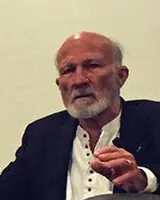
  • Stanley Hauerwas 81%

    Protestant (Methodist / Anglican) · Contemporary · Methodist family

    Closer to you than H. Richard Niebuhr on “Does Scripture stand alone, or within the Church's Tradition?”. Further away on “Do sacraments convey what they signify, or commemorate it?”.

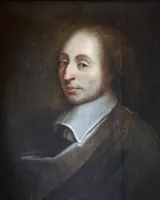
  • Blaise Pascal 80%

    Catholic (Jansenist) · Early modern · Catholic family

    Closer to you than H. Richard Niebuhr on “Should the Church stand apart from society or work to transform it?”. Further away on “Do sacraments convey what they signify, or commemorate it?”.

Traditions and eras closest to youClosest family: Catholic

Tradition families

  1. Catholic 76%closest: Blaise Pascal, Emmanuel Katongole
  2. Reformed 73%closest: Kwame Bediako, H. Richard Niebuhr
  3. Early Church 72%closest: Augustine of Hippo, Tertullian

Furthest: Baptist (64%).

Eras

  • Patristic72%
  • Medieval72%
  • Reformation70%
  • Early modern73%
  • Modern70%
  • 20th century72%
  • Contemporary76%

Average match with the three closest theologians in each family or era, using all 178 placements and Credo's current scoring. Your top ten: Blaise Pascal, Emmanuel Katongole, Stanley Hauerwas, Kwame Bediako, H. Richard Niebuhr, Augustine of Hippo, Tertullian, Mechthild of Magdeburg, Dorothy Day, Nicolaus von Zinzendorf.

Your dilemmas, interpreted8 answered

You faced 8 dilemmas and chose a side firmly every time. Your choices line up with the rest of your answers. Dilemmas count for 1.5 statements (a lean counts half).

  • The curious friend Firm

    A friend who has never opened a Bible asks whether God exists. You start with… Why there is something rather than nothing: an argument from the world itself.

    You chose the natural theology side of “Can human reason reach God, or only God's self-revelation?”. Your answers on this axis balance out near the middle, so this choice is one of the things holding it there. H. R. Niebuhr's placement in Credo is on the other side here.

  • The grieving parent Firm

    A grieving parent asks, "Does God feel my pain?" You answer… God's love is perfect and unshaken; because God is not overwhelmed by grief, God can hold you steady.

    You chose the classical theism side of “Is God beyond change and suffering, or moved by the world?”. Your answers on this axis balance out near the middle, so this choice is one of the things holding it there. H. R. Niebuhr sits near the middle on this axis.

  • Two hearers Firm

    Two friends hear the same sermon. One comes to faith, one does not. At bottom, the difference is… God's grace worked decisively in one of them.

    You chose the sovereign election side of “Does salvation rest finally on God's choice or on a free human response?”. It matches where the rest of your answers on this axis put you. H. R. Niebuhr's placement in Credo is on the same side.

  • Courtroom or forge Firm

    Which image sits closer to the centre of salvation? A forge: iron left in the fire until it glows with the fire's own light.

    You chose the transformation & theosis side of “Is salvation chiefly a verdict or a transformation?”. Your answers on this axis balance out near the middle, so this choice is one of the things holding it there. H. R. Niebuhr sits near the middle on this axis.

  • At the table Firm

    At the communion table, what is happening? We remember Christ's death and proclaim it together.

    You chose the memorial & symbol side of “Do sacraments convey what they signify, or commemorate it?”. It matches where the rest of your answers on this axis put you. H. R. Niebuhr's placement in Credo is on the same side.

  • The unjust law Firm

    A new law will hurt the poor. The Church's first response should be to… Care for the poor directly and be a visible alternative.

    You chose the distinct community side of “Should the Church stand apart from society or work to transform it?”. It matches where the rest of your answers on this axis put you. H. R. Niebuhr's placement in Credo is on the other side here.

  • A year with God Firm

    To know God better this year, you would rather… Spend a week in a silent retreat.

    You chose the mystical & apophatic side of “Is theology a rigorous science or a contemplative ascent?”. Your answers on this axis balance out near the middle, so this choice is one of the things holding it there. H. R. Niebuhr's placement in Credo is on the other side here.

  • The hard teaching Firm

    A long-standing church teaching seems out of step with today's moral insight. You… Rethink it; Tradition is living and can be corrected.

    You chose the development & revision side of “Does doctrine develop and revise, or guard a fixed deposit?”. It matches where the rest of your answers on this axis put you. H. R. Niebuhr's placement in Credo is on the same side.

Written by Credo from your answers and the theologians' placements: a starting point for reflection, not a verdict. How this is generated

More theologians like you

Your nemesis

Read more

47 readings picked for this result from Credo's library of verified links: your top match, near neighbours and nemesis, your strongest leanings and the traditions closest to you. Links open in a new tab.

Start here

Reference articles on the people your answers sit closest to, and furthest from.

Show 3 more

Scholarship

Peer-reviewed articles, open access first. Some publishers ask for a subscription.

Show 12 more

Explore your leanings

Background on the positions you took, with a reading from the other side of your firmest views.

Show 18 more

You and everyone else

Live, anonymous figures from 16 completed Credo results. They describe the people who took this test, not Christians in general.

On 5 of 16 questions, you're with the majority.

Most common top matches

Share of all results whose closest theologian is each of these.

How you settled the dilemmas

  • The curious friendWhy there is something rather than nothing: an argument from the world itself.69% of 16 chose the same side
  • The grieving parentGod's love is perfect and unshaken; because God is not overwhelmed by grief, God can hold you steady.Not enough answers yet (5)
  • Two hearersGod's grace worked decisively in one of them.31% of 16 chose the same side
  • Courtroom or forgeA forge: iron left in the fire until it glows with the fire's own light.Not enough answers yet (5)
  • At the tableWe remember Christ's death and proclaim it together.25% of 16 chose the same side
  • The unjust lawCare for the poor directly and be a visible alternative.Not enough answers yet (5)
  • A year with GodSpend a week in a silent retreat.38% of 16 chose the same side
  • The hard teachingRethink it; Tradition is living and can be corrected.Not enough answers yet (5)

Matches compare your answers with each theologian's documented views, axis by axis, weighted by how much you answered on each. Real people are more complicated than twelve sliders. How matching works

Take the argument to the table

The best part of a result like this is arguing about it. Send it to a friend, compare your nemeses, and talk it over in person.

Browse the cast