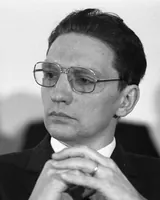
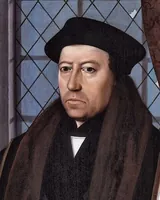
Photo of Kwame Bediako (Wikipedia)Photo: Wikipedia

86%

Closest match

Kwame Bediako

1945 – 2008 · Reformed (Presbyterian Church of Ghana)

Where you meet

  • Theological & canonical
  • Systematic reason
  • Sovereign election

Your result · Contemporary

Result for True thing

Natural theology

Creation, conscience and reason give genuine knowledge of God.

Bring a friend

Your theology, branch by branch

YouBediako, your closest match

God & Revelation

Natural theology · Unchanging yet responsive · Prima Scriptura

  • Can human reason reach God, or only God's self-revelation?Natural theology 86%
  • Is God beyond change and suffering, or moved by the world?Unchanging yet responsive
  • Does Scripture stand alone, or within the Church's Tradition?Prima Scriptura

Grace & Salvation

Wider hope · Forensic justification

  • Does salvation rest finally on God's choice or on a free human response?Sovereign election 64%
  • Will all be saved in the end, or only some?Wider hope
  • Is salvation chiefly a verdict or a transformation?Forensic justification 77%

Church & World

Memorial & symbol · Conciliar · Critical engagement

  • Do sacraments convey what they signify, or commemorate it?Memorial & symbol 68%
  • Is authority in the Church handed down or held in common?Conciliar
  • Should the Church stand apart from society or work to transform it?Critical engagement

Method & Spirit

Systematic reason · Theological & canonical · Development & revision

  • Is theology a rigorous science or a contemplative ascent?Systematic reason 68%
  • Read the Bible first as history, or first as the Church's book?Theological & canonical 75%
  • Does doctrine develop and revise, or guard a fixed deposit?Development & revision 86%

Your profile in depth

Moderate · 12 of 12 axes answered

Your leanings are real but gentle: on many questions you see the force of both sides. Matches for profiles like this are closer together, so your near neighbours matter as much as your top match.

Your strongest conviction is on “Can human reason reach God, or only God's self-revelation?”: firmly at natural theology.

Your closest match is Kwame Bediako (86%), from the Reformed family and the contemporary era. Your top ten span 4 tradition families and 4 eras, so your views cut across the usual denominational lines.

Still open: “Is God beyond change and suffering, or moved by the world?”, “Does Scripture stand alone, or within the Church's Tradition?”, “Will all be saved in the end, or only some?” and 2 more.

Branch by branchWhat your leanings mean, question by question

God & Revelation

  • Can human reason reach God, or only God's self-revelation? Firm

    You trust that creation, conscience and careful argument can give real, if partial, knowledge of God.

  • Is God beyond change and suffering, or moved by the world? Middle

    You hold God's constancy and God's responsiveness together without letting either swallow the other.

  • Does Scripture stand alone, or within the Church's Tradition? Middle

    You give Scripture first place while treating tradition, reason and experience as real but secondary guides.

On these three questions alone, your closest match is John Mbiti.

Grace & Salvation

  • Does salvation rest finally on God's choice or on a free human response? Leaning

    On balance, you rest salvation finally on God's choosing and drawing rather than on the human decision.

  • Will all be saved in the end, or only some? Middle

    You keep a wider hope open without claiming to know how wide it will finally be.

  • Is salvation chiefly a verdict or a transformation? Leaning

    On balance, you see salvation first as a verdict: the sinner declared righteous for Christ's sake.

On these three questions alone, your closest match is Emil Brunner.

Church & WorldYour most open branch

  • Do sacraments convey what they signify, or commemorate it? Leaning

    On balance, you treat baptism and the Lord's Supper as signs of remembrance and of faith already present.

  • Is authority in the Church handed down or held in common? Middle

    You favour shared, conciliar authority, with councils, synods or elders deciding together.

  • Should the Church stand apart from society or work to transform it? Middle

    You favour critical engagement: involved in society, but never simply at home in it.

On these three questions alone, your closest match is J. I. Packer.

Method & SpiritYour most settled branch

  • Is theology a rigorous science or a contemplative ascent? Leaning

    On balance, you like theology done with clear definitions and ordered arguments.

  • Read the Bible first as history, or first as the Church's book? Leaning

    On balance, you read the whole Bible first as one witness to Christ, within the Church's rule of faith.

  • Does doctrine develop and revise, or guard a fixed deposit? Firm

    You expect doctrine to grow and to be rethought in every age.

On these three questions alone, your closest match is Clark Pinnock.

Convictions and open questions2 firm · 5 open

Strongest convictions

  • Can human reason reach God, or only God's self-revelation?firmly at natural theology
  • Does doctrine develop and revise, or guard a fixed deposit?firmly at development & revision

Open or undecided

  • Is God beyond change and suffering, or moved by the world?in the middle (unchanging yet responsive)
  • Does Scripture stand alone, or within the Church's Tradition?in the middle (prima scriptura)
  • Will all be saved in the end, or only some?in the middle (wider hope)
  • Is authority in the Church handed down or held in common?in the middle (conciliar)
  • Should the Church stand apart from society or work to transform it?in the middle (critical engagement)
Unusual combinations3 found
  • Natural theology with forensic justification

    Only 2 of the 178 theologians in Credo combine these two, among them Richard Hooker, B. B. Warfield.

    Of the 59 theologians in Credo on the natural theology side, 51 sit on the opposite side of the second question (transformation & theosis), so this pairing is one of the more distinctive parts of your profile.

  • Forensic justification with development & revision

    Only 5 of the 178 theologians in Credo combine these two, among them Rudolf Bultmann, Albrecht Ritschl, Reinhold Niebuhr.

    Of the 38 theologians in Credo on the forensic justification side, 28 sit on the opposite side of the second question (fixed tradition), so this pairing is one of the more distinctive parts of your profile.

  • Natural theology with memorial & symbol

    Only 6 of the 178 theologians in Credo combine these two, among them Ernst Troeltsch, Friedrich Schleiermacher, Martin Luther King Jr..

    Of the 59 theologians in Credo on the natural theology side, 44 sit on the opposite side of the second question (sacramental realism), so this pairing is one of the more distinctive parts of your profile.

You and Kwame Bediako, axis by axis8 in step · 3 close · 1 apart

You and Bediako are in step on 8 of 12 answered questions and close on 3 more. The widest gap is on “Is salvation chiefly a verdict or a transformation?”: you sit leaning toward forensic justification, Bediako sits leaning toward transformation & theosis (37 points apart on a 100-point line).

Shared convictions: Theological & canonical

QuestionYouKwame BediakoGap
Can human reason reach God, or only God's self-revelation?You: firmly at natural theologyKwame Bediako: leaning toward natural theology16close
Is God beyond change and suffering, or moved by the world?You: in the middle (unchanging yet responsive)Kwame Bediako: leaning toward classical theism1in step
Does Scripture stand alone, or within the Church's Tradition?You: in the middle (prima scriptura)Kwame Bediako: leaning toward Scripture alone10in step
Does salvation rest finally on God's choice or on a free human response?You: leaning toward sovereign electionKwame Bediako: in the middle (enabling grace)9in step
Will all be saved in the end, or only some?You: in the middle (wider hope)Kwame Bediako: in the middle (wider hope)6in step
Is salvation chiefly a verdict or a transformation?You: leaning toward forensic justificationKwame Bediako: leaning toward transformation & theosis37apart
Do sacraments convey what they signify, or commemorate it?You: leaning toward memorial & symbolKwame Bediako: leaning toward sacramental realism28close
Is authority in the Church handed down or held in common?You: in the middle (conciliar)Kwame Bediako: leaning toward hierarchical4in step
Should the Church stand apart from society or work to transform it?You: in the middle (critical engagement)Kwame Bediako: leaning toward transforming society11in step
Is theology a rigorous science or a contemplative ascent?You: leaning toward systematic reasonKwame Bediako: leaning toward systematic reason8in step
Read the Bible first as history, or first as the Church's book?You: leaning toward theological & canonicalKwame Bediako: firmly at theological & canonical5in step
Does doctrine develop and revise, or guard a fixed deposit?You: firmly at development & revisionKwame Bediako: leaning toward development & revision16close

Gap = distance on a 100-point line from one pole to the other. In step: 12 or less; close: 30 or less.

Why Nikodemos the Hagiorite is your opposite6 questions on opposite sides

Nikodemos is the theologian in Credo whose placements sit furthest from your answers overall. On 6 of 12 answered questions you are on opposite sides of the centre, and the biggest gaps are in Method & Spirit and Grace & Salvation and Church & World.

  • Does doctrine develop and revise, or guard a fixed deposit?You: firmly at development & revision · Nikodemos the Hagiorite: firmly at fixed tradition · 81 points apart
  • Is salvation chiefly a verdict or a transformation?You: leaning toward forensic justification · Nikodemos the Hagiorite: firmly at transformation & theosis · 77 points apart
  • Do sacraments convey what they signify, or commemorate it?You: leaning toward memorial & symbol · Nikodemos the Hagiorite: firmly at sacramental realism · 63 points apart
  • Is theology a rigorous science or a contemplative ascent?You: leaning toward systematic reason · Nikodemos the Hagiorite: firmly at mystical & apophatic · 63 points apart

Even so, you share ground: Theological & canonical

A nemesis is a measure of distance between two sets of views, not a judgement on either.

Your near neighboursWhat sets each apart from your top match
  • H. Richard Niebuhr 80%

    Reformed (Evangelical and Reformed) · 20th century · same tradition family as Kwame Bediako

    Closer to you than Kwame Bediako on “Do sacraments convey what they signify, or commemorate it?”. Further away on “Can human reason reach God, or only God's self-revelation?”.

  • Wolfhart Pannenberg 80%

    Lutheran · 20th century · Lutheran family

    Closer to you than Kwame Bediako on “Is salvation chiefly a verdict or a transformation?”. Further away on “Read the Bible first as history, or first as the Church's book?”.

  • Emil Brunner 78%

    Reformed (Swiss) · 20th century · same tradition family as Kwame Bediako

    Closer to you than Kwame Bediako on “Is salvation chiefly a verdict or a transformation?”. Further away on “Can human reason reach God, or only God's self-revelation?”.

  • John Mbiti 77%

    Anglican (Kenya) · 20th century · Anglican family

    Closer to you than Kwame Bediako on “Can human reason reach God, or only God's self-revelation?”. Further away on “Does salvation rest finally on God's choice or on a free human response?”.

Traditions and eras closest to youClosest family: Reformed

Tradition families

  1. Reformed 81%closest: Kwame Bediako, H. Richard Niebuhr
  2. Lutheran 76%closest: Wolfhart Pannenberg, Paul Tillich
  3. Anglican 76%closest: John Mbiti, Richard Hooker

Furthest: Oriental Orthodox (52%).

Eras

  • Patristic71%
  • Medieval74%
  • Reformation76%
  • Early modern71%
  • Modern74%
  • 20th century79%
  • Contemporary78%

Average match with the three closest theologians in each family or era, using all 178 placements and Credo's current scoring. Your top ten: Kwame Bediako, H. Richard Niebuhr, Wolfhart Pannenberg, Emil Brunner, John Mbiti, Richard Hooker, Katharina Schütz Zell, Friedrich Schleiermacher, Paul Tillich, Reinhold Niebuhr.

Your dilemmas, interpreted8 answered

You faced 8 dilemmas and chose a side firmly every time. Your choices line up with the rest of your answers. Dilemmas count for 1.5 statements (a lean counts half).

  • The curious friend Firm

    A friend who has never opened a Bible asks whether God exists. You start with… Why there is something rather than nothing: an argument from the world itself.

    You chose the natural theology side of “Can human reason reach God, or only God's self-revelation?”. It matches where the rest of your answers on this axis put you. Bediako's placement in Credo is on the same side.

  • The grieving parent Firm

    A grieving parent asks, "Does God feel my pain?" You answer… God's love is perfect and unshaken; because God is not overwhelmed by grief, God can hold you steady.

    You chose the classical theism side of “Is God beyond change and suffering, or moved by the world?”. Your answers on this axis balance out near the middle, so this choice is one of the things holding it there. Bediako's placement in Credo is on the same side.

  • Two hearers Firm

    Two friends hear the same sermon. One comes to faith, one does not. At bottom, the difference is… God's grace worked decisively in one of them.

    You chose the sovereign election side of “Does salvation rest finally on God's choice or on a free human response?”. It matches where the rest of your answers on this axis put you. Bediako sits near the middle on this axis.

  • Courtroom or forge Firm

    Which image sits closer to the centre of salvation? A courtroom: the guilty declared righteous for Christ's sake.

    You chose the forensic justification side of “Is salvation chiefly a verdict or a transformation?”. It matches where the rest of your answers on this axis put you. Bediako's placement in Credo is on the other side here.

  • At the table Firm

    At the communion table, what is happening? We remember Christ's death and proclaim it together.

    You chose the memorial & symbol side of “Do sacraments convey what they signify, or commemorate it?”. It matches where the rest of your answers on this axis put you. Bediako's placement in Credo is on the other side here.

  • The unjust law Firm

    A new law will hurt the poor. The Church's first response should be to… Care for the poor directly and be a visible alternative.

    You chose the distinct community side of “Should the Church stand apart from society or work to transform it?”. Your answers on this axis balance out near the middle, so this choice is one of the things holding it there. Bediako's placement in Credo is on the other side here.

  • A year with God Firm

    To know God better this year, you would rather… Work slowly through a great systematic theology.

    You chose the systematic reason side of “Is theology a rigorous science or a contemplative ascent?”. It matches where the rest of your answers on this axis put you. Bediako's placement in Credo is on the same side.

  • The hard teaching Firm

    A long-standing church teaching seems out of step with today's moral insight. You… Rethink it; Tradition is living and can be corrected.

    You chose the development & revision side of “Does doctrine develop and revise, or guard a fixed deposit?”. It matches where the rest of your answers on this axis put you. Bediako's placement in Credo is on the same side.

Written by Credo from your answers and the theologians' placements: a starting point for reflection, not a verdict. How this is generated

More theologians like you

Your nemesis

Read more

44 readings picked for this result from Credo's library of verified links: your top match, near neighbours and nemesis, your strongest leanings and the traditions closest to you. Links open in a new tab.

Start here

Reference articles on the people your answers sit closest to, and furthest from.

Show 3 more

Scholarship

Peer-reviewed articles, open access first. Some publishers ask for a subscription.

Show 11 more

Explore your leanings

Background on the positions you took, with a reading from the other side of your firmest views.

Show 18 more

You and everyone else

Live, anonymous figures from 16 completed Credo results. They describe the people who took this test, not Christians in general.

On 7 of 16 questions, you're with the majority.

Most common top matches

Share of all results whose closest theologian is each of these. Yours, Kwame Bediako, is rarer.

How you settled the dilemmas

  • The curious friendWhy there is something rather than nothing: an argument from the world itself.69% of 16 chose the same side
  • The grieving parentGod's love is perfect and unshaken; because God is not overwhelmed by grief, God can hold you steady.Not enough answers yet (5)
  • Two hearersGod's grace worked decisively in one of them.31% of 16 chose the same side
  • Courtroom or forgeA courtroom: the guilty declared righteous for Christ's sake.Not enough answers yet (5)
  • At the tableWe remember Christ's death and proclaim it together.25% of 16 chose the same side
  • The unjust lawCare for the poor directly and be a visible alternative.Not enough answers yet (5)
  • A year with GodWork slowly through a great systematic theology.63% of 16 chose the same side
  • The hard teachingRethink it; Tradition is living and can be corrected.Not enough answers yet (5)

Matches compare your answers with each theologian's documented views, axis by axis, weighted by how much you answered on each. Real people are more complicated than twelve sliders. How matching works

Take the argument to the table

The best part of a result like this is arguing about it. Send it to a friend, compare your nemeses, and talk it over in person.

Browse the cast