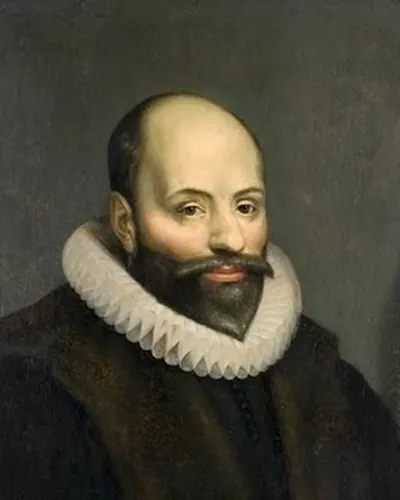
Theologians / Arminius

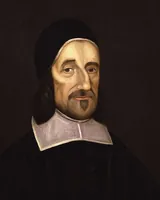
Portrait of Jacobus Arminius
Portrait: David Bailly · Public domain · Wikimedia Commons. Cropped and resized by Credo.

Reformed (Remonstrant) · Reformation

Jacobus Arminius

1560 – 1609

Grace that can be resisted

A Dutch Reformed professor at Leiden, Arminius questioned the strict predestinarian teaching of his colleagues. He taught that God's prevenient grace enables every person to respond, that election is grounded in God's foreknowledge of faith, and that grace can be resisted; the Synod of Dort later rejected his followers' views.

How close are you? All theologians

Where Arminius stands

God & Revelation

  • Can human reason reach God, or only God's self-revelation?Faith seeking understanding
  • Is God beyond change and suffering, or moved by the world?Classical theism 80%
  • Does Scripture stand alone, or within the Church's Tradition?Scripture alone 90%

Grace & Salvation

  • Does salvation rest finally on God's choice or on a free human response?Synergy 80%
  • Will all be saved in the end, or only some?Particularism 80%
  • Is salvation chiefly a verdict or a transformation?Forensic justification 80%

Church & World

  • Do sacraments convey what they signify, or commemorate it?Memorial & symbol 60%
  • Is authority in the Church handed down or held in common?Conciliar
  • Should the Church stand apart from society or work to transform it?Critical engagement

Method & Spirit

  • Is theology a rigorous science or a contemplative ascent?Systematic reason 75%
  • Read the Bible first as history, or first as the Church's book?Theological & canonical 65%
  • Does doctrine develop and revise, or guard a fixed deposit?Fixed tradition 70%

Why these placements

Declaration of Sentiments (1608): conditional election, resistible grace; otherwise a Reformed Protestant on Scripture and justification.

Key works

  • Declaration of Sentiments (1608)
  • Public and Private Disputations

Sources

Read more about Arminius

7 verified links: reference articles, Arminius's own writings where a free text exists, and peer-reviewed scholarship (open access first). Links open in a new tab.

Kindred spirits

Furthest apart

How close are you?