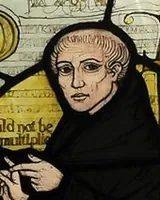
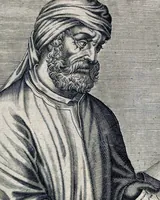
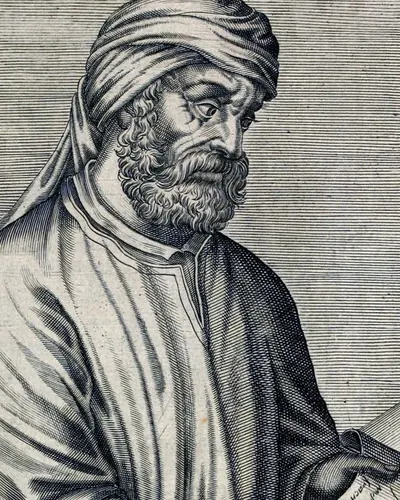
Portrait of Tertullian

80%

Closest match

Tertullian

c. 155 – c. 220 · Early Church (Latin)

Where you meet

  • Systematic reason
  • Particularism
  • Congregational

Your result · Patristic

Result for Rogan

Revelation alone

God is known only where God has chosen to speak, above all in Christ.

Bring a friend

Your theology, branch by branch

YouTertullian, your closest match

God & Revelation

Revelation alone · Relational God · Scripture & Tradition

  • Can human reason reach God, or only God's self-revelation?Revelation alone 100%
  • Is God beyond change and suffering, or moved by the world?Relational God 88%
  • Does Scripture stand alone, or within the Church's Tradition?Scripture & Tradition 100%

Grace & Salvation

Synergy · Particularism

  • Does salvation rest finally on God's choice or on a free human response?Synergy 93%
  • Will all be saved in the end, or only some?Particularism 88%
  • Is salvation chiefly a verdict or a transformation?Forensic justification 63%

Church & World

Spiritual presence · Congregational · Transforming society

  • Do sacraments convey what they signify, or commemorate it?Spiritual presence
  • Is authority in the Church handed down or held in common?Congregational 75%
  • Should the Church stand apart from society or work to transform it?Transforming society 75%

Method & Spirit

Systematic reason · Theological & canonical · Fixed tradition

  • Is theology a rigorous science or a contemplative ascent?Systematic reason 79%
  • Read the Bible first as history, or first as the Church's book?Theological & canonical 75%
  • Does doctrine develop and revise, or guard a fixed deposit?Fixed tradition 75%

Your profile in depth

Clearly shaped · 12 of 12 axes answered

You have clear leanings on most questions, with a few places where you hold back. That gives your profile a recognisable shape without hard edges.

Your strongest conviction is on “Can human reason reach God, or only God's self-revelation?”: firmly at revelation alone.

Your closest match is Tertullian (80%), from the Early Church family and the patristic era. Your top ten span 8 tradition families and 6 eras, so your views cut across the usual denominational lines.

Still open: “Do sacraments convey what they signify, or commemorate it?”.

Branch by branchWhat your leanings mean, question by question

God & RevelationYour most settled branch

  • Can human reason reach God, or only God's self-revelation? Firm

    You hold that God is known truly where God chooses to speak, above all in Christ, and are wary of reasoning up to God from below.

  • Is God beyond change and suffering, or moved by the world? Firm

    You picture a God who is genuinely affected by the world, responding to creatures and suffering with them.

  • Does Scripture stand alone, or within the Church's Tradition? Firm

    You read Scripture inside the Church's living Tradition and teaching office, as things that belong together.

On these three questions alone, your closest match is Tertullian.

Grace & Salvation

  • Does salvation rest finally on God's choice or on a free human response? Firm

    You see grace as an offer and an empowering that human freedom genuinely answers.

  • Will all be saved in the end, or only some? Firm

    You hold that salvation comes through faith in Christ and that some may finally refuse it.

  • Is salvation chiefly a verdict or a transformation? Leaning

    On balance, you see salvation first as a verdict: the sinner declared righteous for Christ's sake.

On these three questions alone, your closest match is Balthasar Hubmaier.

Church & WorldYour most open branch

  • Do sacraments convey what they signify, or commemorate it? Middle

    You see Christ as really present in the sacraments by the Spirit, without tying that presence to the elements themselves.

  • Is authority in the Church handed down or held in common? Leaning

    On balance, you locate authority in each gathered congregation and the priesthood of all believers.

  • Should the Church stand apart from society or work to transform it? Leaning

    On balance, you see faith working through politics and culture for a more just world.

On these three questions alone, your closest match is Richard Baxter.

Method & Spirit

  • Is theology a rigorous science or a contemplative ascent? Leaning

    On balance, you like theology done with clear definitions and ordered arguments.

  • Read the Bible first as history, or first as the Church's book? Leaning

    On balance, you read the whole Bible first as one witness to Christ, within the Church's rule of faith.

  • Does doctrine develop and revise, or guard a fixed deposit? Leaning

    On balance, you see the faith as delivered once for all, to be handed on intact.

On these three questions alone, your closest match is John Owen.

Convictions and open questions5 firm · 1 open

Strongest convictions

  • Can human reason reach God, or only God's self-revelation?firmly at revelation alone
  • Does Scripture stand alone, or within the Church's Tradition?firmly at Scripture & tradition
  • Does salvation rest finally on God's choice or on a free human response?firmly at synergy
  • Is God beyond change and suffering, or moved by the world?firmly at relational God
  • Will all be saved in the end, or only some?firmly at particularism

Open or undecided

  • Do sacraments convey what they signify, or commemorate it?in the middle (spiritual presence)
Unusual combinations3 found
  • Relational God with particularism

    Only 1 of the 178 theologians in Credo combine these two, among them Dietrich Bonhoeffer.

    Of the 22 theologians in Credo on the relational God side, 17 sit on the opposite side of the second question (universal hope), so this pairing is one of the more distinctive parts of your profile.

  • Relational God with fixed tradition

    Only 1 of the 178 theologians in Credo combine these two, among them Hans Urs von Balthasar.

    Of the 22 theologians in Credo on the relational God side, 21 sit on the opposite side of the second question (development & revision), so this pairing is one of the more distinctive parts of your profile.

  • Scripture & Tradition with congregational

    Only 3 of the 178 theologians in Credo combine these two, among them Tertullian, Leonardo Boff, Jon Sobrino.

    Of the 92 theologians in Credo on the Scripture & tradition side, 82 sit on the opposite side of the second question (hierarchical), so this pairing is one of the more distinctive parts of your profile.

You and Tertullian, axis by axis5 in step · 5 close · 2 apart

You and Tertullian are in step on 5 of 12 answered questions and close on 5 more. The widest gap is on “Should the Church stand apart from society or work to transform it?”: you sit leaning toward transforming society, Tertullian sits firmly at distinct community (70 points apart on a 100-point line).

Shared convictions: Revelation alone Scripture & Tradition Particularism Systematic reason

QuestionYouTertullianGap
Can human reason reach God, or only God's self-revelation?You: firmly at revelation aloneTertullian: leaning toward revelation alone25close
Is God beyond change and suffering, or moved by the world?You: firmly at relational GodTertullian: in the middle (unchanging yet responsive)38apart
Does Scripture stand alone, or within the Church's Tradition?You: firmly at Scripture & traditionTertullian: leaning toward Scripture & tradition25close
Does salvation rest finally on God's choice or on a free human response?You: firmly at synergyTertullian: leaning toward synergy23close
Will all be saved in the end, or only some?You: firmly at particularismTertullian: firmly at particularism8in step
Is salvation chiefly a verdict or a transformation?You: leaning toward forensic justificationTertullian: in the middle (union with Christ)13close
Do sacraments convey what they signify, or commemorate it?You: in the middle (spiritual presence)Tertullian: leaning toward sacramental realism15close
Is authority in the Church handed down or held in common?You: leaning toward congregationalTertullian: leaning toward congregational10in step
Should the Church stand apart from society or work to transform it?You: leaning toward transforming societyTertullian: firmly at distinct community70apart
Is theology a rigorous science or a contemplative ascent?You: leaning toward systematic reasonTertullian: firmly at systematic reason1in step
Read the Bible first as history, or first as the Church's book?You: leaning toward theological & canonicalTertullian: leaning toward theological & canonical10in step
Does doctrine develop and revise, or guard a fixed deposit?You: leaning toward fixed traditionTertullian: leaning toward fixed tradition10in step

Gap = distance on a 100-point line from one pole to the other. In step: 12 or less; close: 30 or less.

Why David Bentley Hart is your opposite7 questions on opposite sides

Hart is the theologian in Credo whose placements sit furthest from your answers overall. On 7 of 12 answered questions you are on opposite sides of the centre, and the biggest gaps are in God & Revelation and Grace & Salvation.

  • Is God beyond change and suffering, or moved by the world?You: firmly at relational God · David Bentley Hart: firmly at classical theism · 88 points apart
  • Will all be saved in the end, or only some?You: firmly at particularism · David Bentley Hart: firmly at universal hope · 88 points apart
  • Can human reason reach God, or only God's self-revelation?You: firmly at revelation alone · David Bentley Hart: firmly at natural theology · 85 points apart
  • Is salvation chiefly a verdict or a transformation?You: leaning toward forensic justification · David Bentley Hart: firmly at transformation & theosis · 63 points apart

Even so, you share ground: Synergy

A nemesis is a measure of distance between two sets of views, not a judgement on either.

Your near neighboursWhat sets each apart from your top match
  • William of Ockham 76%

    Catholic (Franciscan) · Medieval · Catholic family

    Closer to you than Tertullian on “Should the Church stand apart from society or work to transform it?”. Further away on “Does Scripture stand alone, or within the Church's Tradition?”.

  • Miroslav Volf 76%

    Protestant (Pentecostal / Episcopal) · Contemporary · Anglican family

    Closer to you than Tertullian on “Should the Church stand apart from society or work to transform it?”. Further away on “Does Scripture stand alone, or within the Church's Tradition?”.

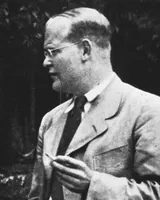
  • Dietrich Bonhoeffer 76%

    Lutheran · 20th century · Lutheran family

    Closer to you than Tertullian on “Should the Church stand apart from society or work to transform it?”. Further away on “Does Scripture stand alone, or within the Church's Tradition?”.

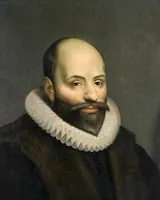
  • Jacobus Arminius 74%

    Reformed (Remonstrant) · Reformation · Reformed family

    Closer to you than Tertullian on “Should the Church stand apart from society or work to transform it?”. Further away on “Does Scripture stand alone, or within the Church's Tradition?”.

Traditions and eras closest to youClosest family: Early Church

Tradition families

  1. Early Church 73%closest: Tertullian, Cyprian of Carthage
  2. Catholic 71%closest: William of Ockham, Leo the Great
  3. Reformed 71%closest: Alvin Plantinga, Karl Barth

Furthest: Oriental Orthodox (63%).

Eras

  • Patristic73%
  • Medieval70%
  • Reformation69%
  • Early modern69%
  • Modern68%
  • 20th century71%
  • Contemporary73%

Average match with the three closest theologians in each family or era, using all 178 placements and Credo's current scoring. Your top ten: Tertullian, William of Ockham, Miroslav Volf, Dietrich Bonhoeffer, John Wesley, Alvin Plantinga, Karl Barth, Balthasar Hubmaier, C. René Padilla, Cyprian of Carthage.

Your dilemmas, interpreted4 answered

You faced 4 dilemmas and chose a side firmly every time. Your choices line up with the rest of your answers. Dilemmas count for 1.5 statements (a lean counts half).

  • The curious friend Firm

    A friend who has never opened a Bible asks whether God exists. You start with… The story of Jesus: God is known where God has chosen to speak.

    You chose the revelation alone side of “Can human reason reach God, or only God's self-revelation?”. It matches where the rest of your answers on this axis put you. Tertullian's placement in Credo is on the same side.

  • Two hearers Firm

    Two friends hear the same sermon. One comes to faith, one does not. At bottom, the difference is… One freely said yes to a grace offered equally to both.

    You chose the synergy side of “Does salvation rest finally on God's choice or on a free human response?”. It matches where the rest of your answers on this axis put you. Tertullian's placement in Credo is on the same side.

  • At the table Firm

    At the communion table, what is happening? Christ himself is truly given to us in the bread and the cup.

    You chose the sacramental realism side of “Do sacraments convey what they signify, or commemorate it?”. Your answers on this axis balance out near the middle, so this choice is one of the things holding it there. Tertullian's placement in Credo is on the same side.

  • A year with God Firm

    To know God better this year, you would rather… Work slowly through a great systematic theology.

    You chose the systematic reason side of “Is theology a rigorous science or a contemplative ascent?”. It matches where the rest of your answers on this axis put you. Tertullian's placement in Credo is on the same side.

Written by Credo from your answers and the theologians' placements: a starting point for reflection, not a verdict. How this is generated

More theologians like you

Your nemesis

Read more

58 readings picked for this result from Credo's library of verified links: your top match, near neighbours and nemesis, your strongest leanings and the traditions closest to you. Links open in a new tab.

Start here

Reference articles on the people your answers sit closest to, and furthest from.

Show 6 more

Primary texts

Read your matches in their own words: public-domain and freely published texts.

Show 3 more

Scholarship

Peer-reviewed articles, open access first. Some publishers ask for a subscription.

Show 14 more

Explore your leanings

Background on the positions you took, with a reading from the other side of your firmest views.

Show 19 more

You and everyone else

Live, anonymous figures from 16 completed Credo results. They describe the people who took this test, not Christians in general.

On 8 of 16 questions, you're with the majority.

Most common top matches

Share of all results whose closest theologian is each of these. Yours, Tertullian, is rarer.

How you settled the dilemmas

  • The curious friendThe story of Jesus: God is known where God has chosen to speak.31% of 16 chose the same side
  • Two hearersOne freely said yes to a grace offered equally to both.69% of 16 chose the same side
  • At the tableChrist himself is truly given to us in the bread and the cup.75% of 16 chose the same side
  • A year with GodWork slowly through a great systematic theology.63% of 16 chose the same side

Matches compare your answers with each theologian's documented views, axis by axis, weighted by how much you answered on each. Real people are more complicated than twelve sliders. How matching works

Take the argument to the table

The best part of a result like this is arguing about it. Send it to a friend, compare your nemeses, and talk it over in person.

Browse the cast